Charleston Watersport

Kayaking, paddleboarding, and flyboarding around Charleston, SC

Blog

Where to Kayak Around Charleston: 6 Beginner-Friendly Spots

Where to Kayak Around Charleston: 6 Beginner-Friendly Spots

Kayaking
If you are new to kayaking around Charleston, the best places to start are calm, sheltered water with easy access and gear for rent: a county-park lake, the marsh creeks, and the protected river sides. Not the open ocean, and not a fast inlet. There is one rule that matters more than how fit or strong you are. In the Lowcountry, the tide decides. Check it before you load the car. Most of Charleston's water is tidal. Marsh creeks that look full at lunchtime can drain to mud a few hours later, and the same moving water that makes paddling easy one way makes it hard the other. The spots below were chosen from public Charleston County Parks and town park access, sorted so a first-timer can match the water…
Read More
Understanding Kayak Paddles: How to Choose the Right One

Understanding Kayak Paddles: How to Choose the Right One

Kayaking
A kayak paddle looks simple, but the wrong one makes every stroke harder than it needs to be. Too long, too heavy, or the wrong blade, and you will tire faster and steer worse. The right paddle matches three things: your height, the width of your boat, and where you paddle. The paddle is the engine. Getting it right matters as much as the kayak itself. Length: matched to you and your boat Paddle length is the first thing to get right, and it depends on two measurements. Your height. Taller paddlers need a longer paddle. Your boat's width. A wider kayak needs a longer paddle to reach the water cleanly. Most beginners in a recreational kayak land somewhere in the middle of the range. If you rent, the outfitter…
Read More
What to Know Before Your First SUP Session

What to Know Before Your First SUP Session

Paddleboarding (SUP)
Most beginners fall in within their first few minutes of stand-up paddleboarding, and that is normal. The people who stick with the sport are simply the ones who knew what to expect before they got on the board. A little preparation covers the gear, the water, and the technique. A good first SUP session is about calm water and a low start, not strength. The gear, kept simple For a first session you can rent everything, which is the sensible way to start. A rental includes the three things that matter: A board wide and stable enough for a beginner, not a narrow racing board. A paddle roughly sized to your height. A leash and a personal flotation device, both of which you should wear. Owning gear can come later.…
Read More
How to Stay Safe While Kayaking Around Charleston

How to Stay Safe While Kayaking Around Charleston

Kayaking
Kayaking around Charleston is calm and beginner-friendly when you respect a few basics, and risky when you ignore them. Most of the danger here is not the paddling itself. It is the tide, the weather, and the water you choose. A short safety routine, done every time, covers nearly all of it. The water does not care how strong you are. Plan for the tide, the weather, and a capsize. Wear the life jacket A properly fitted personal flotation device is the single most important piece of safety gear. If you rent, the outfitter provides one, so wear it rather than stowing it under the seat. If you paddle often enough to buy your own, look for a model rated for paddling and sized to fit snugly. You can compare…
Read More
Where to Go Kayaking Around Charleston: Choosing the Right Water

Where to Go Kayaking Around Charleston: Choosing the Right Water

Kayaking
Charleston gives you more kinds of paddling water than most places: freshwater park lakes, tidal marsh creeks, wide rivers, a busy harbor, and the open Atlantic. Knowing which kind suits the day matters more than picking a single famous spot. This guide is about choosing the right water. For a list of specific put-ins, see our companion guide to the best places to kayak around Charleston. Pick the water to match the day and your experience, not the other way around. The kinds of water you can paddle Freshwater park lakes The calmest option, with no tide at all. County-park lakes give a first-timer flat, contained water to learn on, and several rent boats on site. This is the place to start before you take on moving water. Tidal marsh…
Read More
5 Kayaking Tips for Beginners in Charleston

5 Kayaking Tips for Beginners in Charleston

Kayaking
Kayaking is one of the easiest ways to get out on Charleston's water, and you do not need to own anything to start. Most first-timers rent, and the outfitter sets you up with everything you need. These five tips are written for that reality: a beginner, a rental boat, and sheltered Lowcountry water. Start small, start sheltered, and let the tide do half the work. 1. Rent before you buy For your first few trips, rent. It costs far less than buying, the outfitter handles transport and storage, and a rental comes with a paddle and a personal flotation device. Renting also lets you try different boats before you ever commit to one. When you rent, the gear is the outfitter's job. Put on the life jacket they hand you…
Read More
The Health Benefits of Kayaking

The Health Benefits of Kayaking

Kayaking
Kayaking is one of those rare workouts that does not feel like one. You are outside, on the water, watching for dolphins and birds, and the exercise comes along for free. It is also genuinely good for you, in more ways than the obvious one. The best exercise is the kind you actually want to do again. Kayaking tends to be that. A full upper-body workout Paddling works more of your body than people expect. Each stroke pulls through your back, shoulders, and arms, and your core works constantly to keep you balanced and to rotate through the stroke. Because you power the paddle with your torso rather than just your arms, kayaking builds strength through the whole upper body and midsection without ever feeling like a gym session. Low-impact…
Read More
The Benefits of Stand-Up Paddleboarding (SUP)

The Benefits of Stand-Up Paddleboarding (SUP)

Paddleboarding (SUP)
Stand-up paddleboarding took off in the early 2000s, and it has stayed popular for a simple reason. It is a genuine full-body workout that mostly feels like a calm day on the water. It is also one of the easiest paddle sports to pick up, which is why people of all ages and fitness levels take it up. SUP gives you a core workout and a calm hour on the water at the same time. A full-body, core-first workout Balancing on a board engages your core the entire time you are standing, even before you take a stroke. Add the paddling, and you are working your legs, back, shoulders, and arms as well. The constant small adjustments to stay balanced are what make it such an effective core exercise, without…
Read More
What Is Stand-Up Paddleboarding (SUP)?

What Is Stand-Up Paddleboarding (SUP)?

Paddleboarding (SUP)
Stand-up paddleboarding, usually shortened to SUP, is one of the most accessible ways to get out on the water. You stand on a large, stable board and use a single long paddle to move yourself along. People of all ages take it up for the mix of fun, gentle fitness, and calm time outdoors. Around Charleston, the sheltered tidal creeks make it especially beginner-friendly. SUP is one of the easiest paddle sports to start, as long as you pick calm water and the right tide. How it works Unlike surfing, where you wait for a wave, a paddleboard is large enough to stand and balance on flat water. You propel yourself with the paddle, switching sides to steer. Most beginners start on their knees to get a feel for the…
Read More
Flyboarding in Charleston: What It Is and What to Expect

Flyboarding in Charleston: What It Is and What to Expect

Flyboarding
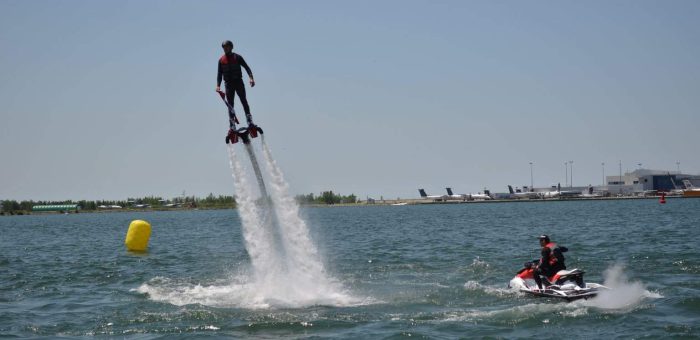
Flyboarding is the most dramatic way to get out of the water around Charleston. Instead of paddling on the surface, you stand on a board connected by a hose to a personal watercraft, and jets of water lift you into the air. It looks extreme, but a first session is more approachable than it appears, as long as you go with a proper instructor. Flyboarding is guided, gear-heavy, and beginner-possible. The instruction is what makes it safe. How it works The setup is simple to describe. A long hose runs from a jet ski or similar watercraft to a pair of boots mounted on a board. The watercraft pushes water under pressure through the hose, and jet nozzles under the boots turn that pressure into lift. With enough thrust, a…
Read More