Most beginners fall within their first ten minutes, and that’s actually the sign you’re doing it right. You’re building the core strength and balance that’ll eventually keep you upright.
Here’s what separates the paddlers who quit from those who stick with it: they know what to expect before they hit the water.
Gear matters. Water conditions matter. Board size matters. And knowing where to start makes all the difference in whether you’re frustrated or progressing.
Your First SUP Session Won’t Be Perfect: And That’s Okay
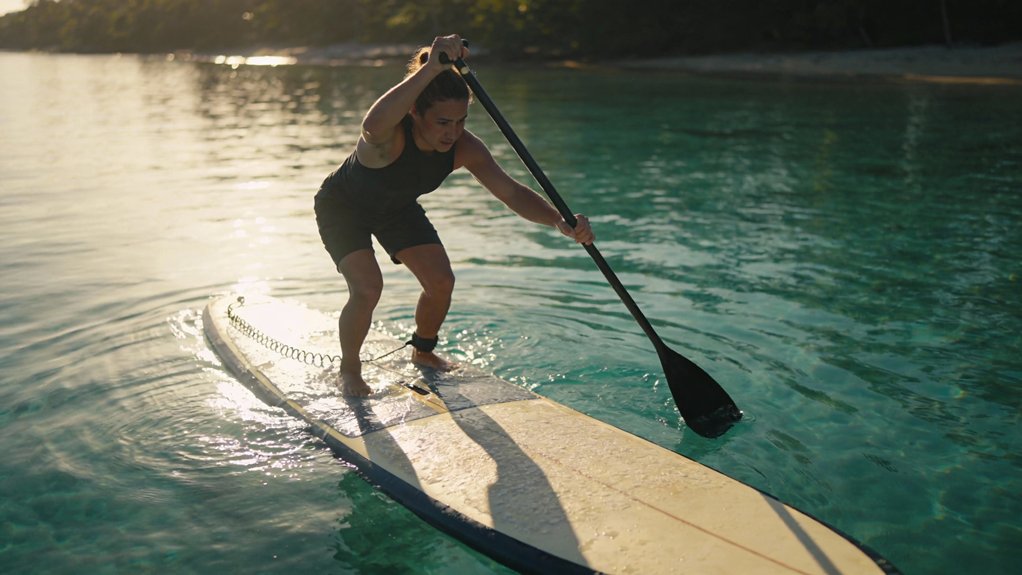
Expect to fall, probably more than once. That’s completely normal for beginners learning to balance on a SUP board.
Each paddler progresses differently, so comparing yourself to others wastes energy better spent embracing imperfections.
Stop comparing your paddle to someone else’s—your imperfections are exactly where growth happens.
Falls happen because you’re building core strength and water awareness. The key is falling away from your board to stay safe, then efficiently climbing back on.
Awkward paddling strokes and wobbling moments aren’t failures, they’re essential skill-builders that enhance your balance and coordination through consistent practice.
Celebrating progress, no matter how small, builds your confidence faster than dwelling on mistakes.
Laugh at yourself. Enjoy the process. You’re exactly where you should be right now.
What Actually Happens When You Fall (Spoiler: You’re Fine)
Since you’re going to fall, probably multiple times, it helps to understand what actually happens when you do.
Water safety starts with falling away from your board rather than diving forward or backward. Use your paddle for support as you climb back on.
Falling into deeper water minimizes injury risk and keeps you clear of shallow obstacles.
Stay calm throughout the process. Your falling techniques improve with each tumble, building better balance and technique.
Many first-time paddlers fall repeatedly.
On warm days, you’ll find the water invigorating rather than uncomfortable.
Each fall teaches you something valuable.
Safety First: Life Jacket, Leash, and Calm Waters
Three essential pieces of gear will keep you safer on the water: a personal flotation device, a leash, and good judgment about where you paddle.
Your PFD isn’t optional: paddle boards count as vessels, and water conditions change fast. Strap that safety equipment on before you launch.
Next, attach a leash to your ankle so your board stays with you if you fall.
Finally, choose calm, protected waters for learning. Skip busy boat traffic zones.
Paddle with a friend who can help if things go sideways.
Since SUP is the fastest growing water sport in the U.S., you’ll likely encounter other paddleboarders, making these precautions even more important for avoiding collisions and ensuring everyone’s safety on the water.
These straightforward precautions let you enjoy yourself without unnecessary risk.
Pick Your Board and Paddle: Size Matters
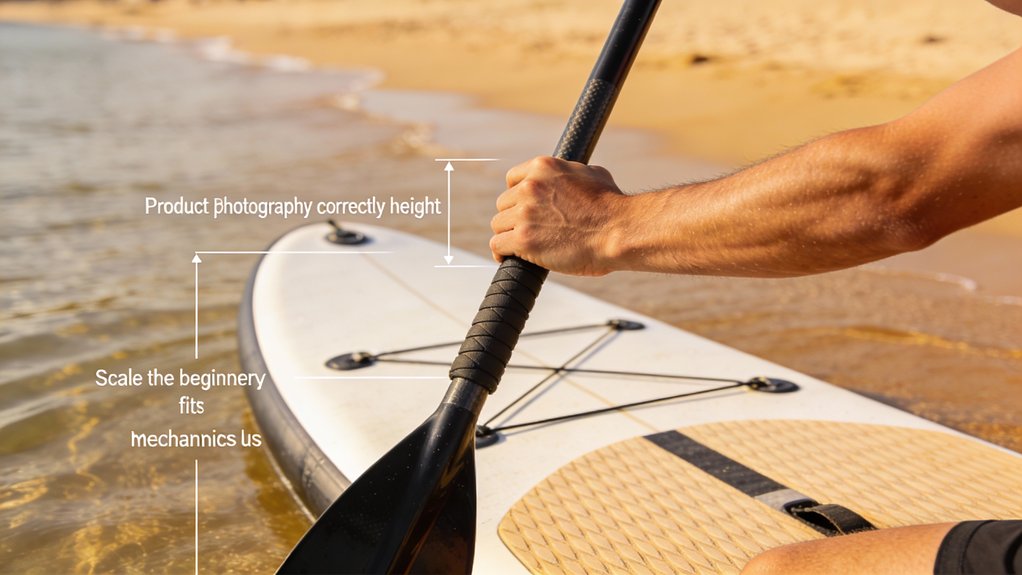
Pick Your Board and Paddle: Size Matters
Getting the right board and paddle combo makes all the difference in your first SUP experience. Larger boards give you stability and confidence, while smaller ones demand more skill.
Check board types: inflatable boards pack down easily for transport, but rigid boards perform better on water.
For paddle length, raise your arm straight up; your paddle should reach your wrist. This measurement guarantees effective strokes without exhausting you.
Don’t grab a canoe paddle; SUP paddles have different shapes and lengths designed specifically for standing.
Talk to a professional who’ll match your weight and experience level to the perfect setup.
Entry and Launch: Getting on the Board Without Panicking
Before you wade into the water, you’ll want to secure your leash around your ankle or calf. This simple step keeps your board from drifting away if you take a tumble.
Getting on takes practice, but you’ve got this.
Entry techniques to master:
- Position your paddle across the board in front of the carry handle for stability.
- Turn the board parallel to shore before wading out.
- Wade until water exceeds your fin’s depth for a smooth launch.
- Place your knees on either side of the handle, push away, and paddle hard.
This paddle positioning strategy keeps you grounded.
Focus on momentum as you launch into your newfound freedom.
Your First Strokes: Staying Low Before You Stand Up
Once you’re floating on calm water, it’s time to focus on your paddle strokes while staying in that kneeling position.
Keep your knees bent and your weight evenly distributed: this balance technique keeps you stable and prevents tipping.
Keep your knees bent and weight evenly distributed to maintain stability and prevent tipping.
Your paddle positioning matters; submerge the blade fully with each stroke for maximum power.
Take a few strokes on one side, then switch to the other.
This alternating pattern uses your muscles evenly and keeps you moving straight.
Stay low and resist the urge to stand immediately.
You’re building the control and confidence you’ll need later.
Master this kneeling foundation first.
Dress for Getting Wet and Bring These Essentials
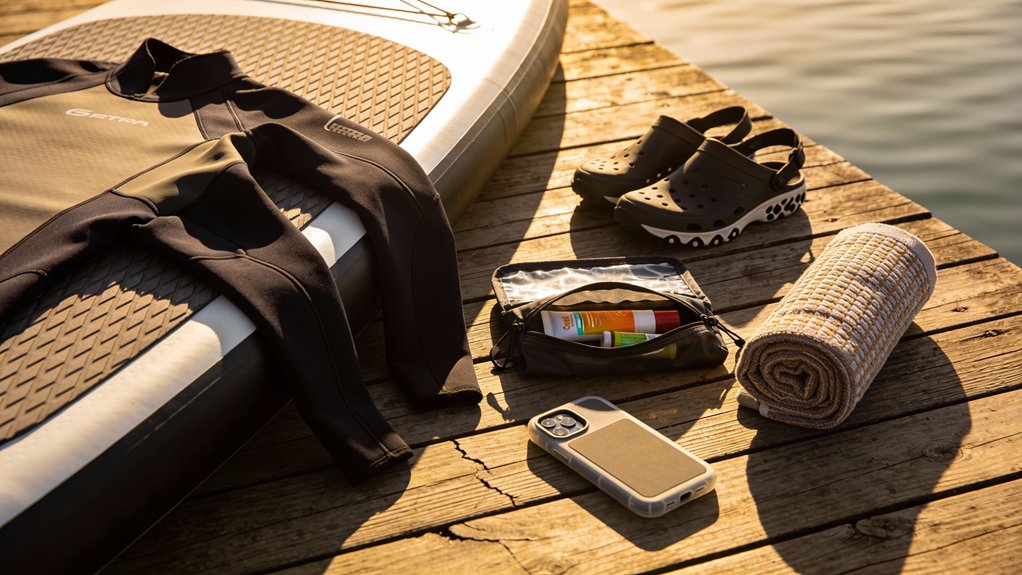
Since you’ll likely end up in the water during your first session, wear swimwear underneath your activewear. This smart swimwear selection keeps you comfortable if you take spills or get splashed.
You’ll also want these essentials:
- A change of clothes and towel for post-lesson comfort
- A personal floatation device (PFD), it’s required since paddle boards are vessels
- A safety whistle and light for visibility near sunset
- Sunscreen and a hat for sun protection
Pack everything in a waterproof bag.
You’re free to enjoy your session knowing you’re prepared for whatever happens on the water.