Say you’re planning a weekend trip down a calm lake, but your friend’s whitewater paddle feels awkward in your hands: too short, too heavy, wrong angle. That’s because paddles aren’t one-size-fits-all.
Your paddle choice affects everything: how fast you move, how tired your arms get, and whether you’ve got real control. The right paddle matches your paddling style, your body size, and where you’re actually going.
So what’s the difference?
Whitewater or Recreational: Which Paddle Fits Your Goal?
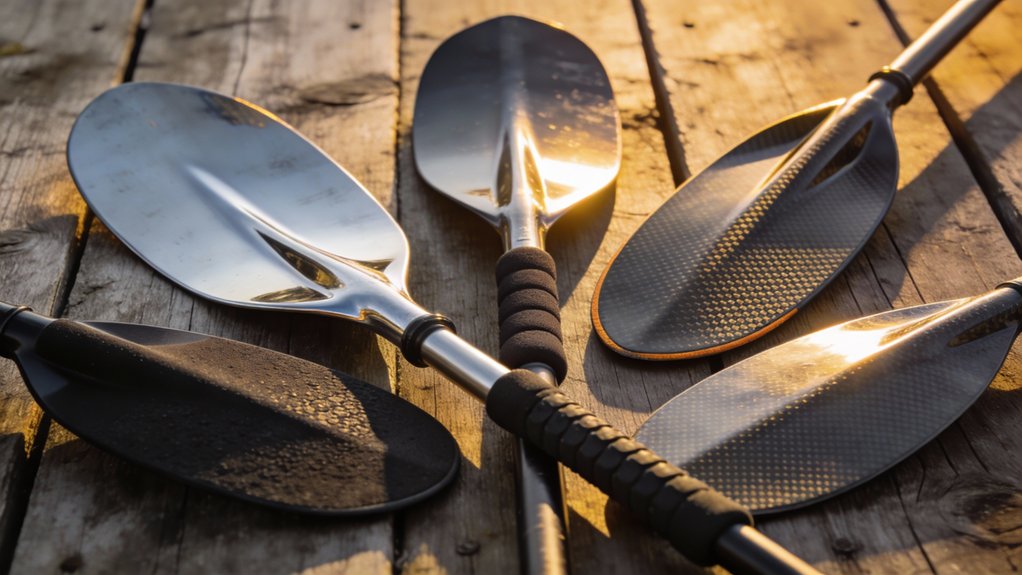
How do you know which paddle will actually work for your paddling style? Your paddle preferences depend entirely on your goals and environment.
Your paddle preferences depend entirely on your goals and environment—choose equipment that matches your actual paddling conditions.
Whitewater paddles run 190-204 cm with robust designs built for power and quick reactions. Recreational paddles stretch 210-260 cm, favoring comfort and endurance on calm water.
Blade shapes matter too: whitewater uses high-angle blades for aggressive strokes, while recreational paddles employ low-angle designs for efficiency. Your kayaking techniques determine the fit.
Using a whitewater paddle on lakes exhausts you needlessly. A recreational paddle won’t deliver the power you need in rapids.
Before selecting your paddle, ensure you’ve mastered paddling basics to understand how different equipment affects your stroke and control.
Match your equipment to your actual paddling conditions.
How to Pick the Right Paddle for Your Needs (Decision Framework)
Now that you’ve picked between whitewater and recreational paddling, it’s time to get specific about what actually works for you.
Start by matching your paddle grip and stroke technique to your body.
Consider your height and kayak width: wider kayaks need longer paddles.
Next, pick your material: aluminum stays affordable, fiberglass balances weight and performance, or carbon fiber gives you the lightest option.
Think about blade angle for your style. High-angle blades suit aggressive strokes; low-angle blades work for relaxed touring.
Finally, evaluate shaft design. Straight shafts feel standard, while bent shafts reduce wrist strain during long sessions.
Why Paddle Length Matters for Comfort and Control
Because paddle length directly affects how your body moves through the water, getting it right makes a real difference in how you feel after hours on the kayak.
A paddle that’s too long forces you to lean excessively, straining your back and limiting control. One that’s too short makes maneuvering difficult and exhausting.
Your kayaker height and kayak width determine the ideal paddle length. Wider recreational kayaks need 240–260 cm paddles, while narrower touring kayaks work better with 200–230 cm lengths.
Proper paddle length enhances control, boosts maneuverability, and conserves your energy throughout your paddling adventures.
Blade Shapes Explained: High-Angle, Low-Angle, and Beyond
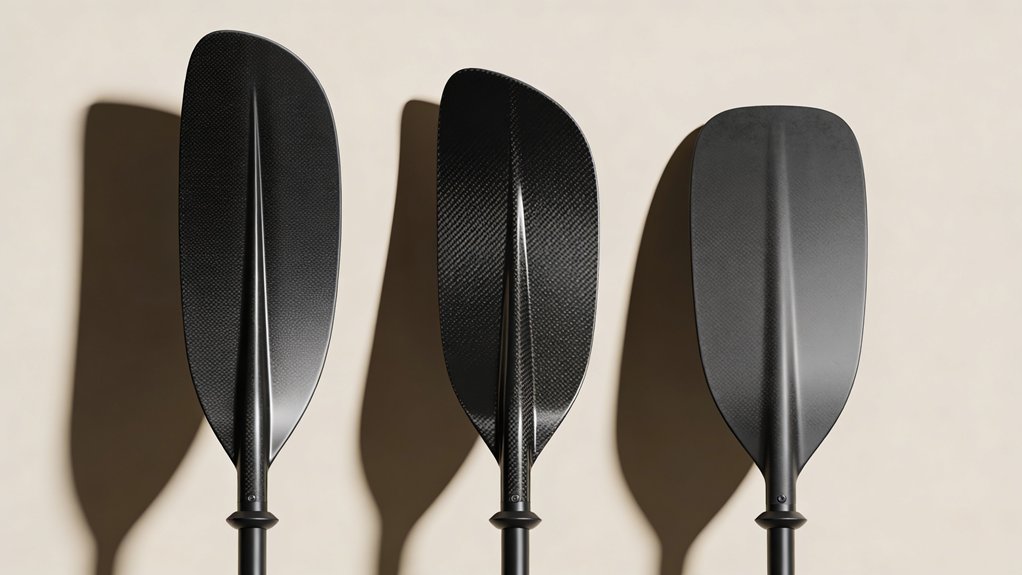
Once you’ve dialed in your paddle length, the shape of your blade becomes your next consideration.
High-angle blades run shorter and wider, roughly 190-204 cm long, delivering powerful strokes perfect for whitewater and racing.
High-angle blades deliver powerful strokes perfect for whitewater and racing applications.
Low-angle blades stretch longer and narrower, between 210-260 cm, promoting efficient paddling technique for touring and flatwater work.
Asymmetrical dihedral designs improve blade efficiency by directing water flow effectively, suiting both styles.
The continuous muscle engagement required during paddling and turning means selecting the right blade shape also contributes to upper-body strength development.
Your choice depends on your paddling technique, experience level, and environment.
Match your blade shape to how you actually paddle, and you’ll reveal better performance and comfort on the water.
Shaft Materials: Aluminum, Fiberglass, and Carbon Compared
While blade shape determines your stroke power and efficiency, the material of your shaft determines how that paddle actually feels in your hands, and how your arms feel after hours on the water.
Aluminum shafts offer aluminum durability and affordability, though they weigh more. Fiberglass strikes a middle ground: lighter than aluminum, reasonably priced, and solid for recreational paddling.
Carbon fiber represents the premium option, delivering carbon efficiency through lightweight design and stiffness that reduces fatigue. You’ll notice the difference immediately.
Heavier paddles tire your shoulders faster. Consider your typical paddling distance and budget carefully when choosing.
Paddle Pieces Explained: 1-Piece, 2-Piece, 4-Piece Trade-Offs
Now that you’ve picked your shaft material, you’ll face another decision: how many pieces should your paddle break into?
One-piece paddles deliver maximum performance with zero play, perfect for serious whitewater shredding.
However, they’re genuinely hard to transport.
Two-piece paddles hit the sweet spot: they offer solid performance balance while fitting easily into vehicles.
Four-piece paddles prioritize travel freedom, squeezing into luggage without hassle.
The trade-off? Snap connections introduce slight play that might affect paddle weight distribution and performance.
Your choice depends on priorities: absolute performance, convenient everyday use, or maximum portability.
Most paddlers choose two-piece for versatility.
Advanced Paddle Features: Feathering, Drip Rings, and More
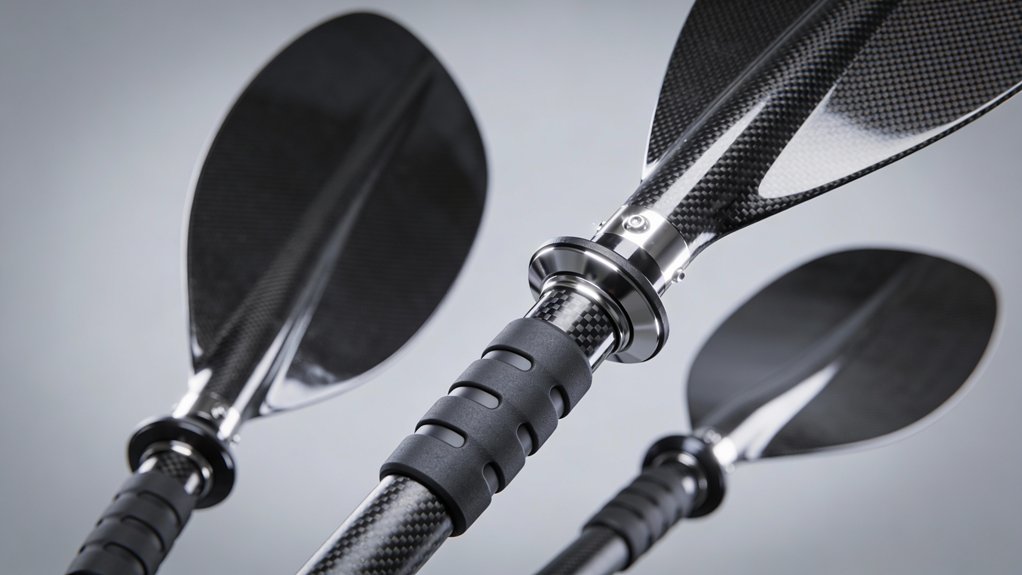
Beyond choosing your shaft material and paddle pieces, you’ll encounter several features that genuinely improve your paddling experience.
Feathering angles between 45 to 90 degrees reduce wind resistance, letting you paddle efficiently in varying conditions. You can adjust these angles to match your style and environment.
Drip rings, rubber stoppers on the shaft, keep water off your hands, maintaining grip during long sessions.
Ergonomic designs like bent shafts promote neutral wrist positions, reducing strain.
Consider carrying a back-up paddle for safety in open water.
These features work together, giving you real control and comfort.
Why Lighter Paddles Feel Faster (and When It Actually Matters)
Once you’ve got your paddle fitted with drip rings and adjusted to your preferred feathering angle, you’ll start noticing something interesting: how much the paddle’s weight affects your actual speed on the water.
Lighter paddles deliver real advantages:
- Reduce fatigue during long paddling sessions
- Enable faster stroke rates and acceleration
- Improve paddle efficiency on extended trips
- Enhance weight distribution across your arms and shoulders
- Maintain speed with less energy expenditure
In flat water, you’ll feel the difference immediately.
Heavier paddles slow your cadence noticeably.
However, rough water changes everything. Turbulent conditions favor heavier paddles for stability and power.
Choose based on your typical paddling environment and distance goals.
Your Paddle Checklist: Materials, Blade Shape, and Next Steps
You’ve narrowed down weight and feathering angles, now it’s time to tackle the fundamentals that’ll actually determine if you’re happy with your paddle.
Match your shaft material to your budget and commitment level: aluminum’s affordable but heavier, while carbon fiber delivers lightweight performance.
Aluminum keeps costs down but adds weight; carbon fiber offers lighter performance for serious paddlers willing to invest.
Choose blade shapes based on your paddling style. High-angle blades suit aggressive whitewater; low-angle blades work better for touring efficiency.
Select blade material wisely: nylon handles beginner abuse, fiberglass improves performance, carbon fiber maximizes efficiency.
Size your paddle correctly using brand sizing charts from Werner or Aqua Bound.
Don’t skip paddle maintenance tips and choosing accessories like feathering options that reduce wind resistance and bent shafts promoting natural wrist positioning.